Category: Leadership development

  • Patience is a Virtue, and Soon, a Crucial Leadership Skill

    Patience is a Virtue, and Soon, a Crucial Leadership Skill

    It’s ironic that a technology that drastically speeds things up will require people to slow down in many areas of their work. Leaders in the AI era will have to develop something that we’re not typically known for…patience. In a sped-up world, the ability to play the long game will be a needed leadership trait.

    This Fast Company article is a great read for leaders, highlighting the need for different ways of thinking in the fast paced world of artificial intelligence. This new approach to leadership will also require ways of measuring certain outcomes differently. Outcomes that may take some time to materialize.

    Most business leaders have been conditioned to chase short term measures – this week’s production numbers, this month’s sales, this quarter’s financials. Generations of managers have been trained this way, and this has filtered down and out across the workforce.

    McDearmid captures the frenetic tension quite well. “For years, we filled our calendars, stayed visible, and kept the machine moving. Our worth was measured in hours, output, and presence. It had to be. Humans were the system, and the system required us to keep it running. We didn’t question it because that was how things got done.”

    The repetitive stuff was the work, and the measures by which the work would be gauged. Fueled by numbers relatively easy to get, requiring minimal patience. However, the human work of curiosity, collaboration, and changing mental models can be slow to unfold. Exploration can take time. Intentionality too.

    The article describes the directional change that leaders will need to make. How their focus must change from tasks to direction setting, seeking clarity for the initiative, and clarifying vision with the team, to name a few. It also points to the fact that leaders will need to be able to think differently about how long it will take to see some important deliverables.

    “AI has taken the repetitive pieces off our plates and has given us back the chance to think, create, and build with intention. It gives us room to lead.” In this new, redesigned space for leadership the ability to ponder and contemplate could be useful skills. Leaders with imagination and a gardener’s mindset will have an advantage. Systems thinking will be highly prized. Because ushering slow moving change through a system previously built for speed will require a shift at the system level.

    It may seem counterintuitive to work on the skill of slowing down in a sped-up world. However, learning to wait calmly for important and often subtle changes is a skill that itself takes time to develop. The sooner we start training leaders to slow down and wait, the faster we can realize the advantages of AI.

    Image by Annette from Pixabay

  • Interconnected Challenges from Far and Near

    Interconnected Challenges from Far and Near

    Here is a great article by  Mary Johnstone-Louis at Forbes.com about the importance of systems thinking for today’s leaders. In addition to sharing five useful practices that promote this thinking, she cautions, “Without systems thinking, interconnected challenges can overwhelm leaders and organizations, leading to reactive and ineffective responses, and even responses that perpetuate the problem.”

    The article focuses on global systems, those external, often far-flung connections that certainly impact the organization. However, leaders would be wise to understand the complexity of internal organizational systems as well. That’s why systems thinking is one of the three guiding principles of the Optimized People Development Systems framework.

    The way organizations find, train, and retain people influence all other organizational systems, making it one of the most (in my opinion THE most) important internal system for leaders to keep in view. When leaders see their people development system more holistically, they are better positioned to optimize it by improving connections, communication, data handling, and delivery of all people centered services.

    Photo by Getty

  • The Missing Part of an Optimized Workplace

    The Missing Part of an Optimized Workplace

    I have been unfair to the organizations I serve. As an advisor and advocate for workforce and workplace development, I have been telling employers for years that they must build great workplaces to attract and retain the talent they need. I have implored them to create people-centered workplaces. I have shown them study after study that insists that without efforts to create great cultures, to make their people feel appreciated, and to ensure that they are investing in the development of their teams, they could expect a lifetime of crippling instability in their workforce. But I failed to recognize an equally important part of the equation.

    Great workplaces are crucial, and most employers understand the need for supportive working environments. But what happens if you take great pains to build a robust environment and engaging culture and then you introduce people into that system with a poor understanding of work, who do not appreciate its value, and its far reaching benefits? That culture will struggle to survive – no matter how hard you work to sustain it.

    Wake-up Call

    “We cannot find people who want to work!” This was my wake-up call. I have been hearing it for years now after helping manufacturers work hard to improve their workplaces. And after this work, time and time again, I hear that people are not staying around long enough for these much-improved cultures to have any impact. It seems apparent that we need to broaden our approach.

    There has been a lot of emphasis on work life balance of late. This is an essential element of consideration, no doubt. However, attitudes about work are also important. Having a balanced understanding of the need for rest and rejuvenation weighed against the absolute need for impactful work, can change the dynamics of the labor market.

    Not a New Debate

    Work has always been a hotly debated topic. Plato thought it was beneath learned people. Martin Luther counted all work, religious and secular, as sacred. Many are fine with work as long as someone else is doing it. Current attitudes seem to lean more toward a grudging acceptance if it pays well. We’d really rather talk about retirement. Preferably before the age of forty.

    We need to work. Work is impactful in so many ways. Economically, when everyone that can work is at work, everyone benefits. Socially, when people work, society works. Spiritually, we were created to work and to serve one another. Individually, work can be a form of self expression. There are health benefits that come from work. Benefits that spill over into families and communities. And the list goes on.

    Balancing the Approach

    It is abundantly clear that we do actually need great workplaces; people-centered workplaces. But if we are going to engage more people in the workforce, we must appeal to something more. We must help people recover a healthy attitude about doing the work. About investing their efforts and time into something that is bigger than themselves.

    There are many complex challenges in our efforts to develop a stable and vibrant workforce, and they will not be solved with simple ideas and solutions. However, if we include in those solutions efforts to reenforce the value of work and begin to shift societal opinions and attitudes toward a better vision of work, we can fill those people-centered workplaces with people who appreciate them.

    Image by Richard Reid from Pixabay

  • The Milieu of Leadership

    The Milieu of Leadership

    We ask a lot of leaders. They are guides, managers, problem solvers, and organizers. They are caretakers and decision makers. Leaders are also integral parts of several important organizational systems, and we ask them to make decisions and choices within the circumstances and contexts of those systems. Systems that are unique to each organization and behave in certain ways. Typically available, generalized leadership training may or may not add value if the systems that leaders belong to are not considered; or worse, are not fully understood.

    According to Cambridge Dictionary online, a milieu encompasses the people, physical and social conditions, and events that provide the environment in which someone acts or lives. The leader’s milieu would necessarily include the way the organization recruits, trains, and seeks to retain people. This of course is what I refer to as the organization’s people development system or PDS. The leadership skills exercised in this particular system fall within these contexts – training, recruiting, onboarding, retention, performance management.

    I’m most interested here in leadership at the frontline, in the trenches, and in the middle, not so much in the upper ranks. Although, they too work within a system that they should thoroughly understand. C Suite and upper management teams generally get most of the training and development though.

    Obviously, a significant portion of what leaders do in front and middle operations is tied to their team’s performance. Meeting deadlines, producing results, and simply getting things done. Though much of this is managerial in nature, the way that leaders get things done requires that they use leadership skills like emotional intelligence and proper communication techniques.

    There are many generic, widely taught leadership training courses available covering important subjects such as communication, emotional intelligence, delegation, etc. For these leaders-in-training an important consideration is, how are these matters generally handled in their current organizational systems?

    Imagine that a newly promoted manager completes a workshop to improve their delegation skills. When, in fact, the people development system that they work within does not really focus on developing and training people. Nor does it have a well-defined and properly utilized performance management process. Delegating successfully in many regards becomes challenging in these system dynamics.

    Perhaps the organization needs to expand its capabilities and wants to be more innovative. So, leaders are given some basic training and asked to lead the team in this new direction. Only, their PDS isn’t structured to promote a learning culture or foster creativity, so the training only frustrates the team.

    What if the company’s leaders bring in a consultant to teach leaders how to be coaches, but the PDS doesn’t effectively facilitate relationship building? This would also be an important system consideration regarding more EQ training for leaders.

    No doubt, leadership training is valuable. However, if these leaders do not understand the PDS they are a part of, or if this important system is not well run, the value that training could bring will be limited and will most likely fail to have the desired impact.

    In conjunction with leadership training classes or workshops, the whole team should strive to understand how their internal workforce development efforts are designed and implemented.

    What are the tools used across the PDS? What data is captured and analyzed to understand system performance? How well connected are the five functional areas of the PDS? How does communication across this system work? Among the most important considerations is how well each PDS stakeholder understands their role in the system.

    The milieu of leadership is complex. And while training for leaders is important, it is also important to understand the system to which they and their team members belong. With this understanding they are more likely to be successful in all the important things that are asked of them.

    Image by Daniel Roberts from Pixabay

  • The Wider Meaning of Technology Adoption

    The Wider Meaning of Technology Adoption

    Acceptance, embracing, agreement, endorsement…these are some of the synonyms of the word adoption. These words point toward a shift in thinking. However, when conversations about adopting technology happen in the manufacturing realm, the general meaning seems to always be related to application or implementation. The adoption of technology involves more than just getting a bunch of new machines though. Adopting tech has other important implications.

    Manufacturing has embraced the use of technology for years. Known widely as Industry 4.0, a lot of the emphasis has been on robots, sensors, and data analytics. Though now, AI is quickly making its presence felt in this important sector too.

    Typically, operations and production systems come to mind when considering how to apply technology in manufacturing. This is due in large part to the fact that engineers and tech pros tend to focus on the technology itself. The machines are cool. They do cool things.

    Last year McKinsey & Co. conducted a survey around the use of AI . They found that employees are taking the initiative and learning about it and using it at an ever-increasing speed. More so than many of the organizations that employ them. Apparently much more.

    This survey was aimed specifically at generative AI use across multiple industries. Obviously, in most industries, people will be impacted when technology solutions are deployed. The same is true for manufacturing. Maybe to a greater extent than in other industries.

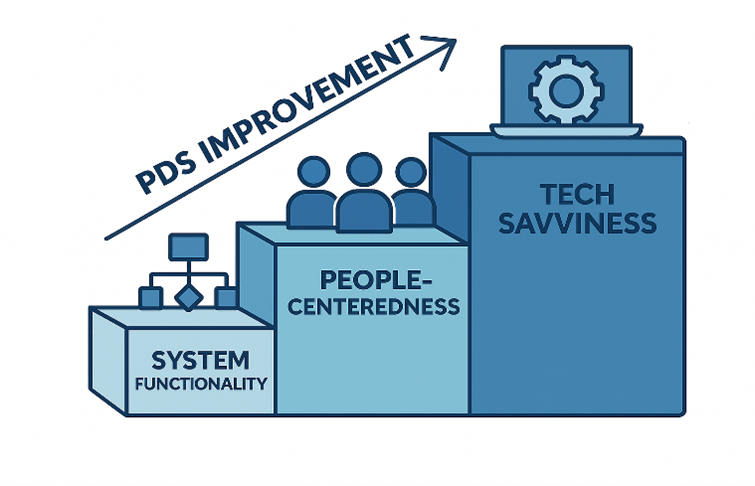
    For this reason, it is important to look past the shiny robots and the slick AI generated solutions to ask some very important questions. What about your people? How will technology change the culture of an organization? How will the organization need to change to take advantage of technology? What does becoming a tech savvy team actually look like?

    McKinsey’s Relyea et al cautioned that, “Technology adoption for its own sake has never created value, which is also true with gen AI. Whether technology is itself the core strategy (for example, developing gen-AI-based products) or supports other business strategies, its deployment should link to value creation opportunities and measurable outcomes.” The people development strategy should certainly be included.

    The report clearly makes the connection between deploying technology and preparing/supporting the teams that use the technology. This is where a higher level of tech savviness is needed.

    In the future, being technologically savvy will mean more than just knowing how to create a prompt or program a robot. It will be more than just learning how the hardware and machinery works. It will also include thinking. How to think about technology. How to think with technology. Thinking about data and thinking about problem solving from a new angle.

    It is more than just training savvy people to do certain technical things with automation. It will be about learning to imagine where technology can be placed, uncovering the data that can help determine whether the change has been successful, learning how to tap into the strengths of generative AI when it is appropriate, and learning to properly evaluate the answers and suggestions given by an AI assistant.

    It will require tech savvy leaders learning how to coach their team to a higher level of tech savviness. Embracing new solutions influenced by technology as opposed to being rigidly connected to traditional ways of doing things.

    The implications will stretch across the organization’s people development system as people learn to harness the full potential of technology. The culture of the organization will need to adapt to these new realities. Developing leaders will include helping to instill this new thinking paradigm. Learning organizations will thrive in this new environment.

    Today employees are learning about and using AI on their own. They might be seriously trying to use it to make work easier and more efficient. Many may just be using it for entertainment. Recent studies have shown that they are also concerned about the impacts of automation, and they recognize that they must learn to work with these new tech tools. Technology has everyone’s attention.

    Workplaces that help people attain a holistic understanding of technology can create and promote a culture of acceptance and endorsement of these new methods and tools. These workplaces can help people embrace technology in the workplace and perhaps understand how to use it constructively beyond their workplace. These types of workplaces can bring team members to an agreement that becoming technology savvy requires that everyone involved must learn to think and apply these concepts together.

    Image by Gerd Altmann from Pixabay

  • Doubling Down on Internal Workforce Development Efforts

    Doubling Down on Internal Workforce Development Efforts

    The heavy cloud of concern over the American labor force continues to weigh down employers. Frustrated and exasperated leaders at all levels are struggling daily with the difficulty of finding and keeping people. My team at the Tennessee Manufacturing Extension Partnership certainly hears the frustration from those we serve.

    Driven by tenacity and a pressing sense of urgency, more business leaders are looking outwardly and investing in long-term solutions with multiple partners while ramping up efforts to attract people to work now. Investing some of that valuable time and effort inwardly could also help address the challenges of finding and keeping a stable workforce.

    Look again.

    Many manufacturers in Tennessee have already taken a close look at their people development efforts. Some have revisited their policies, some have expanded their benefits, and others have bolstered training and development. Still, there are probably other improvements to be made. In the spirit of continuous improvement, there’s always a chance to dig deeper and uncover new efficiencies and opportunities.

    The Optimized People Development System suggests that a good starting place is to create a Talent Stream Map. Based on the value stream map used in lean thinking, the Talent Stream map makes the PDS visible with all its beauty and wonder right alongside all its warts and freckles. Once all the stakeholders have their say and the TS map is complete, it becomes easier to explore possibilities for improvement.

    Look deeper.

    Asking more questions at more levels of the PDS can reveal overlooked opportunities. How can we improve recruiting is a good question. Can we expand where we recruit is also a good question. How are we attracting potential team members and when does attracting turn into recruiting? Can we do that part better? Digging into why we are recruiting will almost certainly stimulate some interesting discussions that cause other parts of the PDS to be reexamined.

    Another good question is, how are our retention efforts? What if we explore how we are personalizing retention? When do we begin our retention efforts in earnest? How can we do that part better? There are many questions that will come from looking more intently at all five areas of the PDS. Challenge the system stakeholders to stretch their question asking skills.

    Applying continuous improvement means to constantly ask more questions and explore more possibilities to make things better. If the organization has a good or even a very good people development system, there are surely other improvements that can still be made. Better questions help us to find those hidden opportunities.

    Hidden in plain sight.

    As the team explores the PDS, they often find things that were obvious, but unnoticed. In one instance, as a group of stakeholders stood in front of their TS map and discussed the flow of communication, they discovered that one tool they were using was not working as designed. They saw this after several questions about how the tool was supposed to be used and when. It was being used, but not consistently and not in the same way by all departments. They suddenly had a meaningful way to improve one of their processes.

    Stakeholders of another system unearthed persistent inconsistencies across departments regarding how training was being delivered and even what training was available. Eight supervisors described how they
    individually understood the company’s training approach, and ultimately discovered that they all had a different understanding of that extremely important aspect of people development.

    It has never been tougher to find people to help an organization fulfill its goals and purposes. Looking at and engaging with outward workforce development efforts to ease the struggle is important. However, overlooked improvements in the organization’s internal processes could also help fill positions and keep them filled.

    Discovery of these opportunities comes from thoughtful, purposeful exploration at all levels of the PDS and a willingness to dig deeper. Even though you’ve looked already, look again. Go another layer or two in. There just might be overlooked opportunities that could help reduce the amount of frustration and helplessness that your team is dealing with.

    Image by nugroho dwi hartawan from Pixabay

  • Finding the Starting Point

    Finding the Starting Point

    Finding the Starting Point

    The optimization process for the people development system is no different than any other system improvement journey. Start by thoroughly understanding the current system. Mapping the current state of the PDS with all the stakeholders can help uncover the “why” and “how” parts and allow for more precise improvement efforts.  

    Here’s an article that I wrote about one company’s mapping efforts.

    https://tmep.cis.tennessee.edu/wire-company-creates-map-improve-their-people-development-system

    Image by TheAndrasBarta from Pixabay

  • Avoiding Slow Surrender in the People Development System

    Avoiding Slow Surrender in the People Development System

    They are usually abandoned gradually, though unintentionally. They live on determination, but when discipline fades, these are among the first attributes to disappear. Ironically, growth and success often cause them to be compromised and quietly forgotten. They are the fundamentals, the essential, bedrock practices so vital for success.

    It’s been said that fundamentals win championships. Look up almost any famous athlete and they often point to their mastery of the fundamentals as the main driver of their success. The concept applies to organizational habits as well; especially when it comes to developing and keeping a strong workforce.

    “Ladies and gentlemen, this is a human being.”

    Football is a complex game. When coach Vince Lombardi embarked on a journey to build a championship team, he went all the way back to the most basic concept. He reintroduced his 1961 team to the football, not to a strategy, to some new rules, or to new ways to play the game, but to the ball itself. He refocused their attention on the most basic of the basics. A detail easily taken for granted. This article from James Clear discusses the impact of Lombardi’s simple idea.

    At its most basic level, an optimized people development system is about people. Its role is to serve people well, treat them well, and keep them well. To do this, the system must value relationships and foster effective communication. Appreciating the whole person and committing to their development and growth are basic principles for an effective PDS. But it’s easy to lose sight of the basics.

    Fast-paced workplaces busy trying to remain competitive and satisfy customers, can let important practices drift, and begin to assume that the basics are somehow happening. Surely everyone knows that the organization values people, right? A detail easily obscured by daily pressures.

    If your PDS seems to have lost something, has grown weak, or worse, has never been strong, perhaps there’s a need to revisit the fundamentals. Was there a time when the PDS was more focused on people? When the basics of valuing every individual were much more prevalent? Has the system crept away from this basic tenant?

    Of Great Consequence.

    Merriam Webster.com offers another nuanced meaning of fundamental, “It applies to something that is a foundation without which an entire system or complex whole would collapse.” The role of the PDS is fundamentally important.

    This system supports all other organizational systems. Practically every organizational system requires people (sounds basic, doesn’t it?). If those people who operate all the organization’s systems are unhappy, underdeveloped, or undervalued, there can be serious consequences. However, when systems are difficult to see (as the PDS is), it is easy to forget how important they really are.

    In practice, this means that leaders and stakeholders of the PDS must constantly assign high levels of importance to the PDS and be disciplined about maintaining this focus. Previous posts on this blog explore this idea in more detail.

    Avoid a Slow Surrender.

    Mahatma Gandhi once said, “All compromise is based on give and take, but there can be no give and take on fundamentals. Any compromise on mere fundamentals is a surrender. For it is all give and no take.

    Abandoning the fundamentals that empower an organization’s people development system is a slow surrender. It starts when the stakeholders fail to value relationships. When they forget that treating people with dignity and respect is non-negotiable, when they fail to encourage their people to learn and grow, they give up future potential and miss the opportunity to deepen engagement. Communication weakens and powerful components of success slowly disappear.

    When the perceived importance of the PDS diminishes, training gets pushed off and staff development sees little or no investment. When leaders take the PDS for granted, they can inadvertently compromise the organization’s vision.

    Modern methods for finding, training, and retaining people are very complex. In the spirit of Vince Lombardi, leaders should ensure that the basic practices that support their people development system are not lost in the melee. In addition, they should strive to constantly highlight the importance of the system to the organization’s goals.

    To keep the fundamentals at the forefront of the organization’s collective mindset takes discipline and determination. Champions pay attention to the fundamentals. They commit themselves to them and practice them consistently. Building a championship-caliber people development system requires the same level of commitment.

  • Who’s in? – 4 Tips to Win a Competition You May Not Realize You’re in

    Who’s in? – 4 Tips to Win a Competition You May Not Realize You’re in

    An employer of choice makes better choices about who to bring on board because they have made good choices about their people development system and the culture they want to build.

    In this blog series, we’ve been exploring how all employers are competing to be an employer of choice, even if they don’t realize they are in the game. To improve their position in this race, the first tip is to learn about other competitor organizations they are up against. The second, is that the stakeholders of the organization’s people development system should realize that the potential employee they are after isn’t the only one making choices.

    In addition to hiring decisions, stakeholders of the company’s PDS make crucial choices about the way the system is administered and supported. Those decisions feed back into the employer of choice calculus.

    The third tip relates to the people who own the PDS.

    Let the whole team in on it.

    “That’s HR’s responsibility.” I often hear responses along these lines when I ask leaders about their internal workforce development efforts. It takes more than just the HR team to make the PDS work well.

    There are many stakeholders of an organization’s workforce development processes. These include frontline supervisors, line leads, department heads, and senior managers. Unfortunately, we sometimes forget to tell many of those stakeholders that we are aiming to be a preferred employer and that we need their help in doing it.

    They don’t know what they don’t know.

    Leaders at all levels influence the culture. A great example is their attitude toward training. If they are unwilling to give their team members time to attend training or if they complain about the process, their team will be negatively impacted. By extension, if they do not understand and appreciate the need for a learning culture, they will short circuit efforts to build such a culture.

    Stakeholders are important connectors across the five functional areas of the PDS – recruiting, onboarding, training, retention, and performance management. Do we let them know this? Do we train them to be good stewards of the PDS and the people that this system serves?

    Recruiting great potential talent is wasted when those new hires are passed on to team leaders who do not play their part well. Conversations that begin in the recruiting phase should continue through the onboarding and into the training and retention phase. The PDS should allow this communication to happen easily and consistently.

    If all stakeholders do not know the extent of their influence, and how to make that influence positive in nature, how can the company become an EoC?

    Help them see their part.

    Much of the leadership development that is offered to frontline and mid-level leaders is focused on the leader and their ability to engage people. Making good decisions, communicating well, and thinking strategically are all important learnings for leaders.

    It is just as important that all the leaders and stakeholders of the PDS see the system and understand their role in its performance. They also need the training and development to help them fulfill that part of their responsibilities.

    Building a healthy and vibrant company culture depends on the efforts of all the players. Get them involved in the competition for EoC by telling them who they are competing against and why winning (or at least moving up the rankings of employers) is so important to the company’s future and theirs.

    Once the stakeholders on board and collectively pushing to win the competition for EoC, the system must be able to sustain your new status. Which is the topic of our next post.

    Image by Gerd Altmann from Pixabay

  • Who’s choosing? 4 Tips to Win a Competition You May Not Realize You’re in

    Who’s choosing? 4 Tips to Win a Competition You May Not Realize You’re in

    Every employer is a competitor in the race to be a preferred employer, that employer that draws people in and keeps them engaged for long stretches of their careers. There are some leaders who have a watchful eye toward the goal of being an employer of choice. However, there may be quite a few who aren’t watching the race at all. If there is a list of 50 or 500 employers in your neighborhood, your company ranks somewhere on the scale of great, good, or bad places to work.

    My last post advocated that a good first step toward improving your position is to understand the nature of the competition. Recognize your competitors, get to know them, learn from them, and develop a strategy to move up the rankings. The second tip has to do with choices.

    It’s not one-sided.

    Most literature promoting the idea of becoming an EoC is written with the employee as the one whose choice is of paramount importance. While it is true that they are the focus of this competition, they are not the only ones making choices. Employers must also make important choices, and these decisions inform the EoC rankings by communicating with current and potential employees about the company’s attitude toward people.

    Consequences of choice.

    Bad hiring decisions can harm any previous efforts taken to become an EoC. If, for example, a poor choice of candidates is made because the organization’s people development system is unclear on the team’s needs, the new hire will likely leave prematurely and perhaps with a not-so-good review of the experience.

    Some choices made by employers are made well before the hiring process. Long-term decisions to support or not support training delivery will have future impacts on the morale of the existing team and therefore the atmosphere within the organization. Culture is the key to becoming (and continuing as) an EoC. Having a great benefits package within a poor culture won’t move your company up the rankings in the minds of employees. The point is that, in addition to hiring decisions, leaders and stakeholders of the company’s people development system make other crucial choices about the way the system is administered and supported. Those decisions feedback into the employer of choice calculus.

    Positioned to choose.

    The company’s PDS is the primary system within the organization that nurtures culture. It is the system that facilitates communication with employees. Ultimately, the PDS is the system that decides if you are an employer of choice or not. This is why it is important to ensure that it operates effectively and efficiently.

    Image by Jan Vašek from Pixabay