Tag: employee-engagement

  • Time to Challenge the One-Sided Employee Engagement Push

    Time to Challenge the One-Sided Employee Engagement Push

    Stickiness hasn’t changed in the last quarter of a century. According to Gallup’s long running, annual surveys, employee engagement has remained around 30% and active disengagement around 17% since Y2K was a thing. Gallup’s surveys and others confirm that getting people to consistently participate at a higher level desperately needs to be improved.

    Employee engagement is a prime area where improvement can benefit everyone. People are frustrated. Money and productivity are being lost due to low engagement and the negative impacts of a disengaged workforce show up at multiple levels beyond just the workplace.

    Why haven’t we been able to move the needle on the levels of engagement? It’s not like we haven’t been trying. I, and many of my workforce development peers, have been preaching to employers for years the need to create an engaging workplace. And most have been sincere in their attempts to do this demanding work. Still, we hear very regularly that these same employers are struggling to find people who want to work, people who will stick around long enough to see the benefits and advantages of being on the team. Some, including the MikeroweWORKSFoundation, have lamented the loss of the will to work. Maybe we’ve been focusing too much on only one side of the equation.

    Limits to an Engaging System

    Each team member is a system, just as the organization is a system. When these two systems are integrated, both are impacted. So, the probability of success by the organization in building an engaging environment will be limited if the newly integrated systems do not share a common goal around, or even a unifying understanding of the purpose and value of work. If the individual system is unaware of how to engage, unable to engage, or unwilling to engage, how successful can the organizational system’s attempts at engagement be?

    Focus on the Other Part of the Equation

    Here’s a potentially controversial solution – let’s help individual team members appreciate the many values of work and why engaging at work is in their best interest. There are distinct and powerful reasons for individuals to pursue being engaged at work.

    Beyond the obvious economic benefits, work is good for the health – physical, mental, and yes, spiritual health. A good day’s work influences positive feelings toward life. Workplace stress is well documented. How much of this might be relieved with a healthier view of work? Family life benefits when things are good at work. A different mindset about work could help promote this.

    Work is an integral part of the human experience. Always has been, always will be. But it goes beyond just the part of work we get paid for. The theme of work runs all the way through the Christian scriptures starting with the first verse of Genesis. I’m no religious scholar, but a cursory search indicates that work is pretty prominent in many other belief systems as well. We need to help people take a holistic view of work. The whole person comes to the job, so the whole person should be taken into consideration, including the spiritual side.

    Other Benefits

    In future posts we’ll unpack some more details of the benefits and values of work. Looking at the definition of engagement is helpful. So too the way we measure it. Engagement at work is very much an emotional reaction. How do we feel about the work, the people, the mission, and vision of the organization? It is emotionally intelligent for everyone to engage at work. How might we bring EQ into the solution to this challenge? Other topics might find their way in as well. Your thoughts and insights could add immeasurably to this exploration, so I invite you to opine as we explore.

    For years we have, in my opinion, pushed employee engagement mostly from the employers’ side of the equation. Certainly, there is still work to be done by employers; however, the other stakeholders must also take responsibility and do their part to engage and be engaged.

    An Optimized People Development System can be a strong vehicle for change in this effort. Examining the concept of engagement while looking closely at the internal system we depend upon to find, train, and retain people can offer strategic opportunities for improvement. Improvements to the system and the philosophy under which it operates could certainly help the organization and each individual within it, stick together longer over a shared appreciation for the true scope and amazing values of work.

    Image by Mohamed Hassan from Pixabay

  • Avoiding Slow Surrender in the People Development System

    Avoiding Slow Surrender in the People Development System

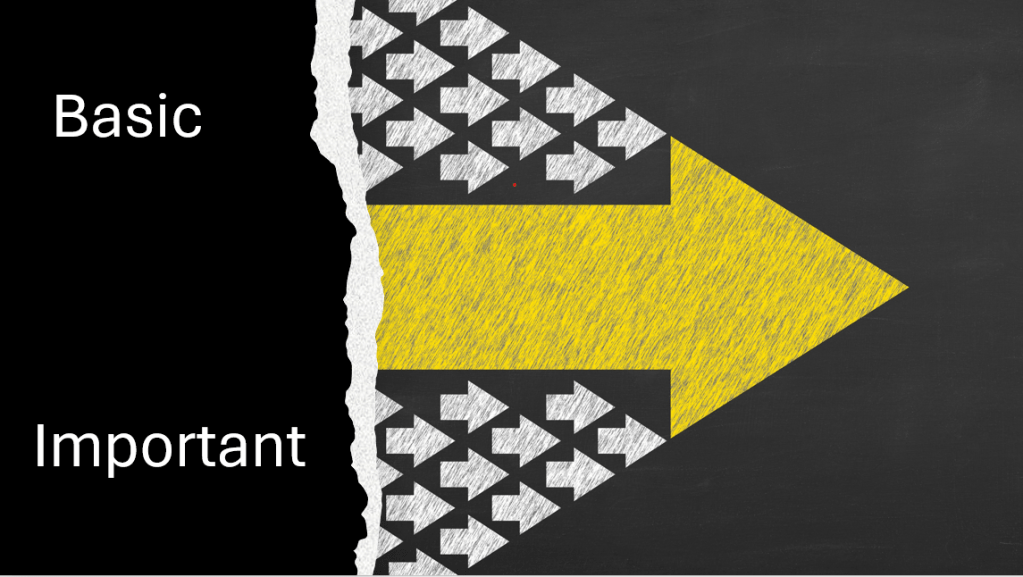
    They are usually abandoned gradually, though unintentionally. They live on determination, but when discipline fades, these are among the first attributes to disappear. Ironically, growth and success often cause them to be compromised and quietly forgotten. They are the fundamentals, the essential, bedrock practices so vital for success.

    It’s been said that fundamentals win championships. Look up almost any famous athlete and they often point to their mastery of the fundamentals as the main driver of their success. The concept applies to organizational habits as well; especially when it comes to developing and keeping a strong workforce.

    “Ladies and gentlemen, this is a human being.”

    Football is a complex game. When coach Vince Lombardi embarked on a journey to build a championship team, he went all the way back to the most basic concept. He reintroduced his 1961 team to the football, not to a strategy, to some new rules, or to new ways to play the game, but to the ball itself. He refocused their attention on the most basic of the basics. A detail easily taken for granted. This article from James Clear discusses the impact of Lombardi’s simple idea.

    At its most basic level, an optimized people development system is about people. Its role is to serve people well, treat them well, and keep them well. To do this, the system must value relationships and foster effective communication. Appreciating the whole person and committing to their development and growth are basic principles for an effective PDS. But it’s easy to lose sight of the basics.

    Fast-paced workplaces busy trying to remain competitive and satisfy customers, can let important practices drift, and begin to assume that the basics are somehow happening. Surely everyone knows that the organization values people, right? A detail easily obscured by daily pressures.

    If your PDS seems to have lost something, has grown weak, or worse, has never been strong, perhaps there’s a need to revisit the fundamentals. Was there a time when the PDS was more focused on people? When the basics of valuing every individual were much more prevalent? Has the system crept away from this basic tenant?

    Of Great Consequence.

    Merriam Webster.com offers another nuanced meaning of fundamental, “It applies to something that is a foundation without which an entire system or complex whole would collapse.” The role of the PDS is fundamentally important.

    This system supports all other organizational systems. Practically every organizational system requires people (sounds basic, doesn’t it?). If those people who operate all the organization’s systems are unhappy, underdeveloped, or undervalued, there can be serious consequences. However, when systems are difficult to see (as the PDS is), it is easy to forget how important they really are.

    In practice, this means that leaders and stakeholders of the PDS must constantly assign high levels of importance to the PDS and be disciplined about maintaining this focus. Previous posts on this blog explore this idea in more detail.

    Avoid a Slow Surrender.

    Mahatma Gandhi once said, “All compromise is based on give and take, but there can be no give and take on fundamentals. Any compromise on mere fundamentals is a surrender. For it is all give and no take.

    Abandoning the fundamentals that empower an organization’s people development system is a slow surrender. It starts when the stakeholders fail to value relationships. When they forget that treating people with dignity and respect is non-negotiable, when they fail to encourage their people to learn and grow, they give up future potential and miss the opportunity to deepen engagement. Communication weakens and powerful components of success slowly disappear.

    When the perceived importance of the PDS diminishes, training gets pushed off and staff development sees little or no investment. When leaders take the PDS for granted, they can inadvertently compromise the organization’s vision.

    Modern methods for finding, training, and retaining people are very complex. In the spirit of Vince Lombardi, leaders should ensure that the basic practices that support their people development system are not lost in the melee. In addition, they should strive to constantly highlight the importance of the system to the organization’s goals.

    To keep the fundamentals at the forefront of the organization’s collective mindset takes discipline and determination. Champions pay attention to the fundamentals. They commit themselves to them and practice them consistently. Building a championship-caliber people development system requires the same level of commitment.