Tag: Workplace Culture

  • What it Means to Optimize a People Development System

    What it Means to Optimize a People Development System

    In some instances optimization is a moving target. Continually improving a system that is influenced by several stakeholders and operates on many levels is challenging. Add in the fact that many system functions can occur at many different times – some overlapping, some sequentially, some unknown to most stakeholders – and you have an idea of how much the target can move. That is the nature of an organization’s people development system. Interestingly, these dynamics present some unique enhancement opportunities.

    The Obvious

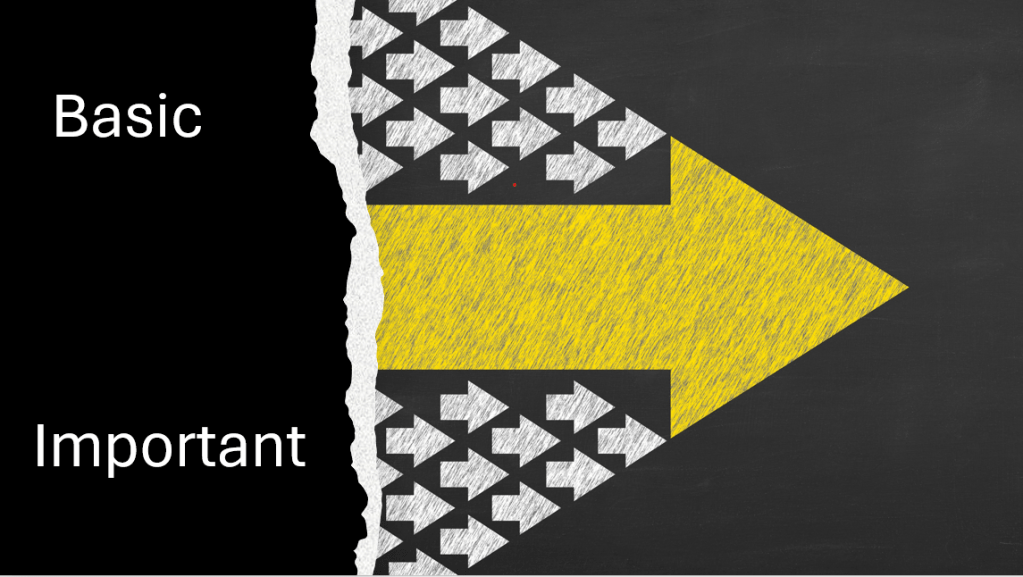
    On one level, optimization of the PDS means striving to continuously improve the system’s functions by identifying efficiencies. For example, how people are logically and effectively moved through the system, how data is captured, how PDS tools are deployed, etc.

    There are also opportunities to engage all stakeholders through stronger communication and more robust connections. This might look like monitoring the types of messages being sent and received across the PDS, fostering relationships through mentoring, and creating strong visual communication pieces such as training matrices.

    This is the practical, operational side of the PDS. Other improvements at this level might involve upgrading tools like individualized onboarding schedules and development pathways.

    The Less Obvious

    Because the system is concerned with people, there is another level that is more intuitive and driven by emotion. On this level, optimization can mean things like strategically aligning the values of all PDS customers.

    The customers of the PDS are 1) the people being trained, 2) the organizational teams that those trained people will join, and 3) the organization itself. Each of these customers bring specific values and expectations, some of which are often unspoken. The PDS is responsible for facilitating the exchange of these ideals. This requires constant attention and constant affirmation that the value brought is appreciated.

    As the PDS continues to improve and become more effective, it allows each customer to consistently contribute value to the other customers and fulfill certain expectations of growth, performance, and of learning.

    Optimization on this level can also include creating and sustaining a very particular awareness. It needs to register with the individual at an emotional level that the organization wants them to grow and thrive. This perception feeds self-efficacy and helps create and strengthen bonds.

    This is more than overt communication. This type of awareness is ultimately fed by the culture, the level of enthusiasm that leaders exhibit about learning, the consistency of the expectations to learn and grow, and even the amount of money invested. These types of signals speak volumes about the organization’s level of commitment to developing people.

    At this level of the PDS, personal commitment and a willingness to engage are nurtured. Optimization requires first that leaders understand the nuances of this level of performance in the PDS and second that they maintain a commitment to constantly monitor it for improvement.

    Appreciating the Levels

    Due to multiple levels of complexity, it takes a very focused effort to see the complete PDS that operates within an organization. Seeing the obvious opportunities as well as those less obvious but still powerful movers requires that all stakeholders have a holistic understanding of the system, including those influential levels where bonds are created and emotions are engaged.

    Image by Gerd Altmann from Pixabay

  • Just how Powerful are Your People?

    Just how Powerful are Your People?

    Everyone has some amount of power – even if it isn’t much. I remember discussing this idea on several occasions in my graduate studies in educational psychology. The learner has power in the system meant to grant them access to knowledge.

    They have the power to choose to participate; they can determine at what level to affect outcomes within the class; and, if given the opportunity, they even have the power to shape the curriculum.

    The point is; they bring something to the table that is important for the system’s success and survival. They also bring this type of power to the workplace. 

    Some may look at an organization’s people development system and think that generally the power flows in one direction. After all, the organization offers training, development, and other growth opportunities. Employees receive these benefits and find security, safety, potential success, etc.

    However, the caretakers of an optimized PDS understand the nature of shared power and seek to use it to continuously improve their system.

    According to the American Psychological Association, reciprocal determinism, “…maintains that the environment influences behavior, behavior influences the environment, and both influence the individual, who also influences them.” A concept largely attributed to Albert Bandera’s work in social learning theory.

    The people served by the PDS are beneficiaries but also benefactors; customers but also value adders; free agents that can either help or harm.

    Respecting and enabling these give-and-take relationships can help ensure that the undeniable power possessed by employees gets invested back into the organization.

    The Power to Choose

    People get to decide whether or not to contribute; they can selectively add value; they can deliberately enhance organizational pride; they can intentionally choose to be a positive force in the culture. They can do all of these and more – or not.

    They can choose to learn, to strengthen communication, or to underperform. They can elect to exercise their power to help attract talent, to help train that new talent, and to help retain it. Even if they are not directly involved as stakeholders of the people development system.

    The best people development systems use tools like development pathways that help clarify available choices and encourage greater engagement. These top-notch systems acknowledge contributions and are careful to recognize the value that each person chooses to bring.

    The Power to Effect

    The collective motivations of individuals drive an organization’s efforts. Inspired people pour extra energy into their work and their teams. That extra energy underpins stronger relationships, fuels creativity, or simply adds to a heightened level of determination to excel. Uninspired people are generally unconcerned about the affect they might have on the team and the organization.

    Leaders of an optimized PDS develop a new appreciation of the idea of engagement. They understand that the power of influence ripples throughout the organization and can enhance the environment even more.

    The Power to Change

    Being adaptable in today’s workplace is a much-desired skill. People who possess the power and willingness to change, continuously upgrade, and repeatedly step out of their comfort zone are highly valued.  

    Yet change requires support from the organization. It requires a culture that celebrates learning and, to a great extent, a culture that embraces failure as a means of moving forward.

    Development processes that not only support these ideas but actively encourage them can attract people who are excited by change and motivate those who might be intimidated by it.

    Recognizing that every individual has some degree of power is a sign of respect. It is an acknowledgment that everyone involved brings something valuable to the table. And that can make a people development system more effective.  

    Image by Gerd Altmann from Pixabay 

  • A System That Never Quits… or, Shouldn’t Anyway  

    A System That Never Quits… or, Shouldn’t Anyway  

    In some systems, processes can be easily followed from a beginning point to completion. For example, production systems tend to have a start-to-finish flow. Raw materials come in, modifications occur, and finished goods exit the process. Service delivery processes can often be easily traced within systems designed for that purpose. In these systems, it is fairly easy to understand what is happening at any given time. It is not so easy with the people development system. If leaders do not understand the dynamic behaviors of the PDS, opportunities could be missed, system performance could be limited, and poor decisions could harm the system’s effectiveness.

    Phases of Activity

    I have made the case that the PDS is difficult to see in operation. This is due to non-linearity and to multiple variables that come into play sight unseen. An important implication of this is the need to recognize what parts of the system are active and when those activities are taking place.

    As an open system, the PDS operates in and is influenced by its environment, taking feedback from other organizational systems and adjusting. The system is always active at some level. When headcount is unstable, recruiting and onboarding efforts are more active. Think of this as phase one system activity.

    When headcount is stable, the emphasis shifts to retention and performance management – phase two. Training processes support both phases of the PDS, with these activities fluctuating based on several system variables.

    Something is Always Happening

    No matter which phase is dominant, activity in the less dominant phase should still be present. Does the act of recruiting ever really come to a complete stop? In an optimized PDS, there is always some effort made to improve and refine sources, improve materials, and identify potential audiences, even if there are no current job openings to fill.

    Is the training program constantly evaluated for efficacy and efficiency? No matter where the greatest workforce development activity is focused, continuously improving training should be of paramount importance. Good training has far-reaching impacts on the organization.   

    Development pathways are a tool that should be used in all phases of the PDS and are especially important in bolstering retention and performance management. Are these pathways being actively managed? It doesn’t matter where the overall system emphasis is; this training map is most effective when used at the opportune time along the individual’s journey.

    Before or After

    Typically, when there is a contraction or spike in some system performance, stakeholders respond after the fact. For example, if attrition numbers change, attendance issues suddenly develop, or some quality issue points to the need to revisit the training processes.

    The optimized PDS proactively monitors data and interacts with stakeholders and the individuals served by the system to get out in front of any potentially harmful issues.

    Why it matters

    At any given time and at various levels, the PDS is active, or should be. These activities might involve both the initial phases of adding people or the secondary phases of training and retaining them. Or, it could include robust efforts in both. An awareness of the fluctuating dynamics of the system is vital to managing it well and improving overall system performance.

    Image by Gerd Altmann from Pixabay 

  • Optimized People Development Systems Drive Better

    Optimized People Development Systems Drive Better

    The car is sliding sideways, the engine screaming, rear tires smoking, the front tires turned into a series of long, violent skids that change quickly and often. Everything is moving fast as the driver uses a combination of the car’s controls to keep the tire smoke boiling and keep it swinging wildly into the next turn.

    This is one modern-day definition of drifting – lots of speed, lots of adrenaline. Course adjustments yield instant results. The ability to guide the speeding car effectively is a critical skill.

    Steering something that moves at a snail’s pace offers a whole new set of challenges and requires unique skills for those doing the steering.

    Workplace culture moves slowly, sometimes imperceptibly, and sometimes when we wish it wouldn’t. Gallup recently published an insightful article called How to Steer a Drifting Culture in which they highlighted some of the dynamics that cause this slow drift.

    Alongside some great advice for managing constantly-shifting cultural influences, there is also an underlying challenge for organizations to consider how well their internal workforce development system functions as a whole. In other words, is their people development system optimized to help provide the guidance required?

    The People Development System

    The article highlights three important system requirements:

    • The system must provide clear feedback.
    • The PDS should be purpose-driven.
    • Communication and relationships across the PDS are vital.

    Information Needed

    The authors suggest, “…leaders should measure the strengths and weaknesses of their one-of-a-kind culture…”

    The PDS has to provide various types of information to help determine conditions. If the recruiting is strong but training is weak, culture will be negatively impacted. If retention efforts are weak, a strong onboarding process will be less successful. A robust performance management element will help bolster retention. An optimized PDS provides this data.  

    Communication transmits culture. And that flow of communication starts at recruiting and continues all the way through to retention and performance management. Capturing strengths and weaknesses in this type of system can only happen when communication is open and flowing through an optimized PDS.

    A poorly connected siloed PDS will be unable to read the culture properly. Continuously improving the PDS ensures that leaders are getting useful and timely feedback. 

    Purpose Drives Culture

    “…the best leaders consider their purpose and brand when designing their culture…”

    In a recent post, I suggested that a workforce optimization system that understands its reason for being will behave differently than a system that simply aims at obviously significant goals. Taking this idea further, the Gallup article highlights the connection between purpose and brand and how employees can be motivated if they understand both.

    Optimizing the PDS helps to refine the system operation so that these two important drivers are clearly embedded as team members encounter the system from beginning to end.

    Clear, Continuous Communication

    The authors suggest four questions helpful in determining where and how culture drift has occurred. These questions relate to:

    • Subtle unseen changes that occur within the system.
    • Affected perceptions of employees (and other stakeholders).
    • What the PDS is promoting about the culture.
    • The employee value proposition (telling the organization’s story to existing and potential team members – from the start of the conversation (recruiting) all the way through to retention).  

    All of these dynamics can be difficult to ascertain. The system has to be able to understand subtle shifts and monitor things like mood and attitude. As I see it, the only way to effectively answer these questions is by having an optimized people development system operating as a system, not as five siloed areas. A system that is sharing data and having connected conversations.

    Drifting cars require several system elements for control – brakes, throttle, transmission, steering – all working in concert. Steering a slowly evolving culture also requires a system that works together.

    In short, if the system that organizations use to find, train, and retain people is taken for granted; if it is not subjected to continuous improvement and optimization; if its complexity is unappreciated and unaccounted for, it will struggle to guide critical adjustments over the very slow drifting cultural journey.