Category: Artificial Intelligence

  • Successful AI Adoption and Motivated People Both Require This

    Successful AI Adoption and Motivated People Both Require This

    It is a complex endeavor, hard to quantify, easily destroyed, and we have been unable to improve it for 30 years. And now, it’s getting more difficult to manage, even as it continues to be one of the most vital elements of the success of our systems. Sustaining employee engagement has proven to be tough, and in the era of AI it is increasingly essential that we figure it out.

    The irony is that successful adoption of AI and employee engagement share similar requirements. Both need more human centricity – better connections between people, ensuring that people find their place, and effective ways to align purposes (both the individual’s purposes and the organization’s). Fortunately, most organizations already have a system to help with these. The key is to optimize that system to the mutual benefit of the organization and the team.

    Connecting

    Relationships are the currency of employee engagement. Yet, this idea often gets lost in the AI discussion. In most of the conversations I’ve had recently with manufacturing leaders and AI proponents, they are laser focused on the new tools, applications, and capabilities of the technology.

    When I ask about their team and how adopting technologies might affect their people, many tend to hesitate, some are genuinely surprised by the question. They are thinking deeply about how AI will impact production systems, logistics, engineering, and other vital systems. But the system that gets very little attention is the most important one.

    Morag Barrett penned a recent article for Fast Company addressing the impact of AI on relationship where he made this observation, “The quality of connection between human beings is the single most important variable in every system we’re worried about, and it’s the one we’re all still treating as optional.”

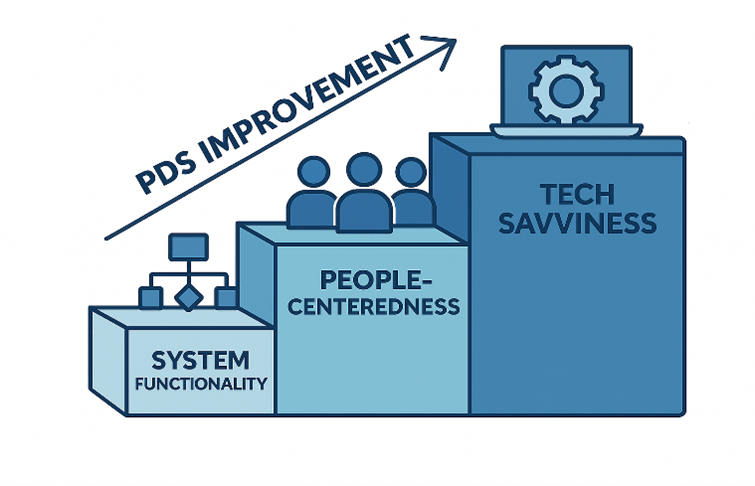
    An organization’s people development system encompasses their internal workforce development efforts. It’s the system that promotes relationships, communicates to system stakeholders, and helps create culture, among many other functions. Importantly, it is a system that can be improved upon. This is the premise of the OPDS framework.

    After improving system functionality, the second level of optimization for the OPDS is People Centeredness where stakeholders explore and improve the system’s capacity for developing people, where learning organization concepts are applied, and where the work of relationships is emphasized.

    Graphic by ChatGPT

    This is the level of improvement where leaders consider if the PDS is supporting the uniquely human work that is required to make the most of AI and automation. The key questions here are: does our PDS really serve people well? Does it foster engagement on multiple levels? Does it promote the human in the loop aspects required by AI adoption?

    Belonging

    Being engaged at work has many facets. This is part of the complexity involved. Some would say that the relationship between employer and employee is a type of social contract. But it’s more than that. Engagement is an emotional decision that drives commitment and investments of time, energy, and dedication. It’s more than just an agreement of you pay me; I give you this.

    Addressing the fear that AI could potentially disrupt the work-for-wages balance, Barrett asked, “What happens to dignity, purpose, and identity when contribution is decoupled from compensation? Work has never been just about money. It’s been about belonging to a team, a mission, a community of people who need what you bring. What happens when that belonging is no longer guaranteed?”

    Being mutually committed and relationally connected underpins belonging. The optimized PDS intentionally fosters a culture where people know they are valued and know they share some responsibility for the wellbeing of the organization and for the people they work alongside. Everyone makes sure everyone belongs. That takes strong leadership, great communication, and a shared determination.

    Purpose

    The pursuit of purpose and meaning is an age-old search; it has never been owned by one generation. However, what has changed is how the search for these has moved up the ranks of priorities in the realm of work.

    Mark Twain famously said, “The two most important days in your life are the day you are born and the day you find out why.” It seems that work has always played an outsized role in defining one’s purpose and in the age of AI, purpose is one of many constructs under threat.

    The optimized PDS comprehends that both the organization and the individual team members are motivated by purpose, so the system strives to know what those purposes are and help every team member in their journey toward their purpose.

    System stakeholders have frequent conversations with members and track their progress to ensure the connection to purpose. There are structured learning opportunities, for example through a personalized individual development plan. Retention efforts and performance management efforts help support the journey as relationships within the team provide encouragement and accountability.

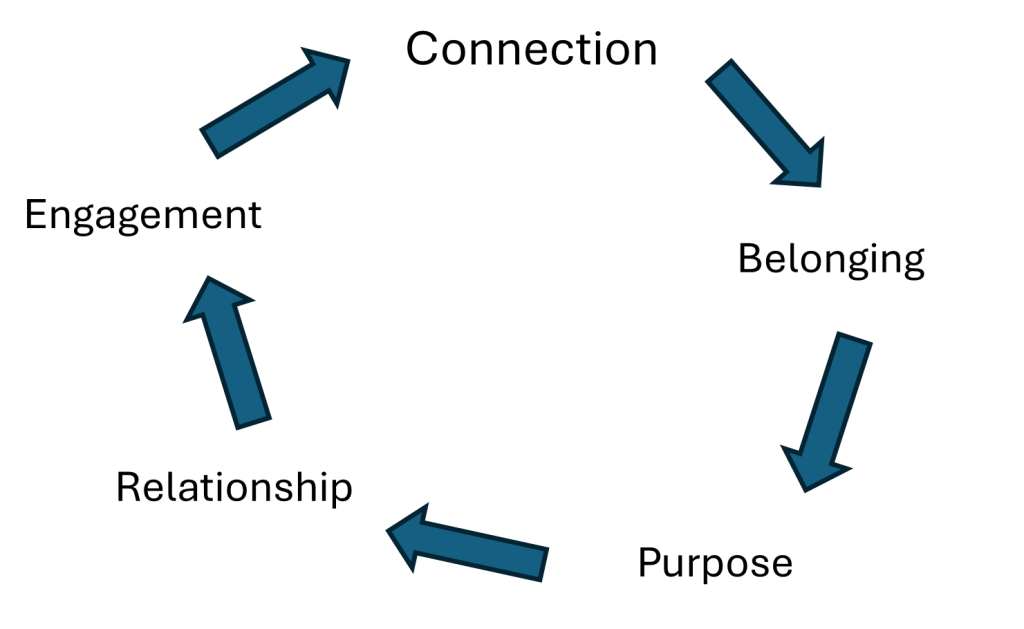
    Being connected, having a sense of belonging, and understanding one’s purpose helps to create a virtuous cycle. Interestingly, both the organization and the individual value this cycle. Each is encouraged and strengthened by this same reenforcing loop.

    Employee engagement has always been a challenge. AI will not make this easier, it will make it more challenging, and it will do so at a faster pace. The organization’s people development system is a vital part of the solution to greater employee engagement. It is the vehicle that ensures that humans are always at the center of the organization’s strategy, even when that strategy is heavy on the tech side.

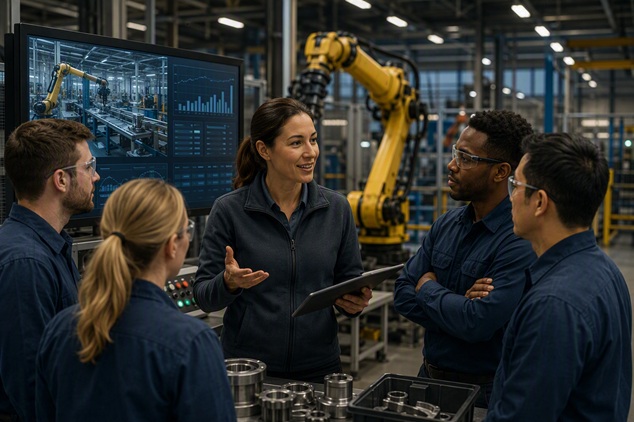
    Feature Image generated by ChatGPT

  • Unconventional Choices in the Era of Artificial Intelligence

    Unconventional Choices in the Era of Artificial Intelligence

    It seems premature to use the word unconventional at this stage of the AI adventure, the conventional being far from established. However, nascent standards are taking shape, driven by fast developing trends and the din of voices from all areas of life intent upon forcing certain choices as this technology encroaches.

    It feels, in some instances, as though choices are being made for us. AI is here to stay; therefore, we will use it. AI will wipe out jobs so figure out how to adapt. The choice to use AI or not, for now is still a choice. Although, that too seems to be changing. Nevertheless, there are some choices, coming soon, that humans will have to make. AI can’t make these choices for us.

    It’s About Time

    One of the main selling points of artificial intelligence, often the first one rolled out, is that it will free people from certain tasks giving them something that is wholly separate from the amazing output of the technology – time. We will all be freed from the burdensome stuff that sucks up our time. But, freed to do what, exactly? What will we do with this newfound time? How will organizational leaders guide these choices?

    Choosing what matters most

    In AI conversations, the thing that seems to be talked about most is greater productivity; we will have more time to make more stuff and deliver more services. But do we really need more stuff? Can our systems adjust so quickly to a rapid increase in volumes of products or a tidal wave of more services? Most businesses and markets will face serious constraints from multiple directions, limiting the amount of rapid growth the system can allow or sustain.

    Perhaps the first unconventional choice is to not focus on AI to super charge productivity but instead seriously explore how this innovative technology might promote better outcomes for humans. If we suddenly have more available time, we could build stronger relationships which might lead to greater team chemistry, stronger collaboration, and a level of creativity we’ve never experienced.

    Such a choice would allow us to invest this brand-new time we’ve discovered into an expanded concept of people development and the wellbeing of every team member. Imagine having a team of individuals each one thriving holistically – at home, at work, in the community – all choosing to engage and contribute because they are less stressed, more excited about the future, and generally feel like they are a part of something special.

    Today, employee engagement is miserably low and has been for 30 years. Key demographics are missing from the workforce and show no interest in reengaging. Work related stress is high and getting higher. Workers and employers seem more suspicious of each other than ever before. And the effects of these symptoms are mounting. Making more stuff is not going to change this dynamic.

    Choose to See AI differently

    Could AI help reverse the deteriorating rate of engagement? Maybe, if we can see past the parts that have a lock on people’s attention. Certainly, the tools, the capabilities, and the possibilities AI offers are great, but its potential for organizations to build a different kind of workplace culture is far longer lasting.

    What if AI is a once in a lifetime opportunity to recenter our attention, an opening allowing us to make a much-needed course correction? AI has the capacity to augment human capability. If we choose to see it as such. AI seen from this perspective changes the conversation. It promises to offer intriguing solutions to vexing problems by fixing some foundational ills.

    Instead of choosing to pursue artificial intelligence for greater productivity, maybe we choose the unconventional; to make AI about people. To improve organizational culture that leads to more stable workforces. Maybe we will choose to produce enough high-quality stuff but not so much that it causes damage to other parts of our vital systems. Maybe we choose to unlock greater levels of innovation and creativity by focusing on the human aspects that can do our world some good. Along the way we might even influence what eventually becomes conventional wisdom in a technology driven world.

    Image from Microsoft 365